BPC-157
Last reviewed September 26, 2026
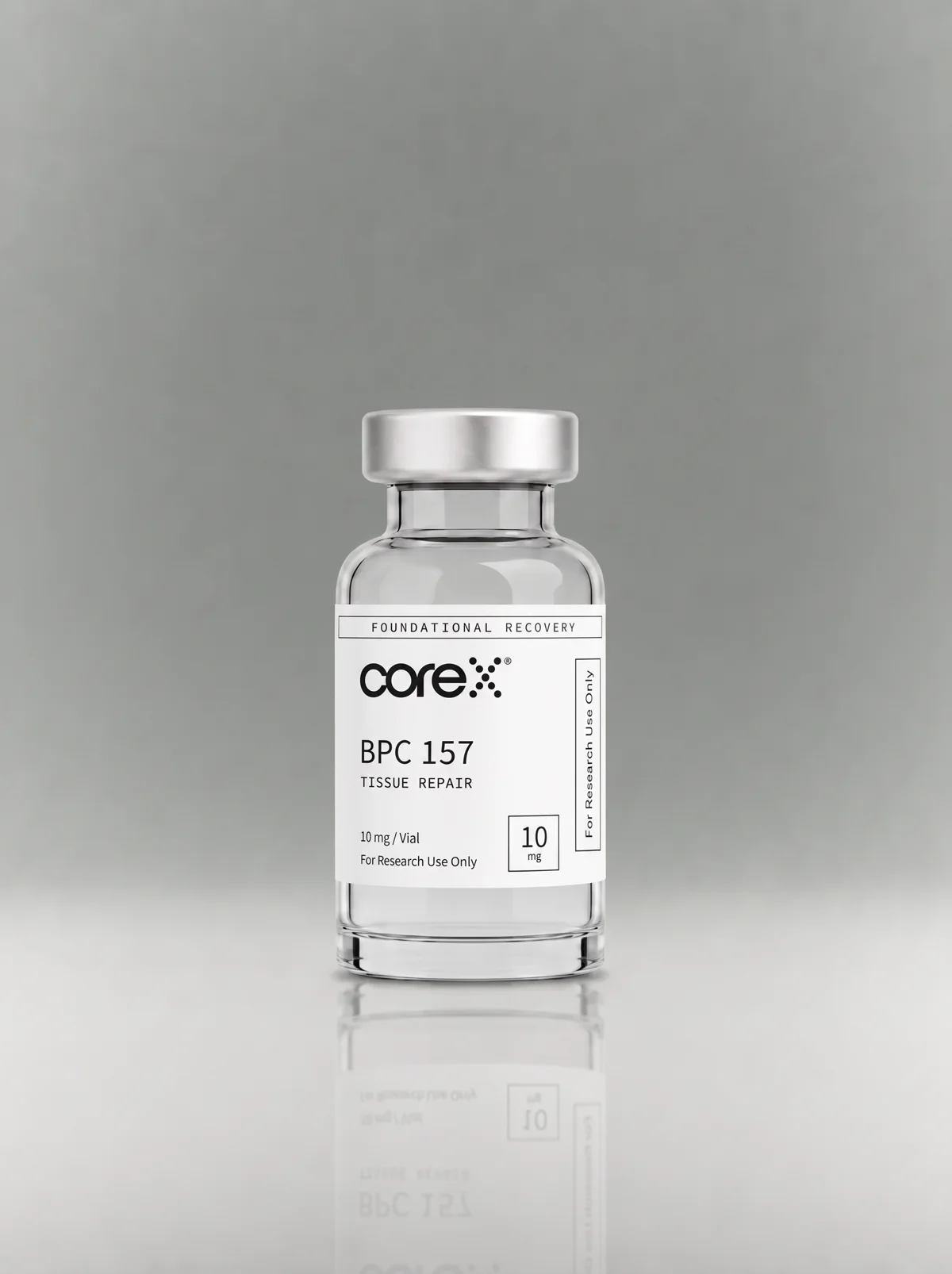
BPC-157 is a synthetic sequence derived from a protein found in gastric juice. Research examines its role in gut barrier integrity, connective-tissue repair, and the signaling that coordinates healing.
Mechanism of action
Research investigates BPC-157 for its influence on angiogenic signaling and growth-factor receptor expression at sites of tissue stress, alongside effects on the epithelial lining of the digestive tract.
- Angiogenic SignalingStudied for its relationship with VEGF-associated pathways involved in forming the microvasculature that supports repair.
- Gut BarrierExplored for a role in maintaining the integrity of the intestinal lining under inflammatory stress.
- Route studied
- Subcutaneous
- Research status
- Early clinical
Most BPC-157 research consists of animal and preclinical work, with a small number of limited human reports, such as a study of intra-articular injection for knee pain, and no large controlled trials identified.
What the research covers
What research examines
- Musculoskeletal soft tissue healing
- Wound healing
- Gastroprotection and gut barrier integrity
- Angiogenic and VEGF-associated signaling in repair
- Knee pain in a small human report
- Applications in orthopaedic sports medicine
Reported effects in studies
- Human safety data are limited
- Adverse events are not systematically summarized in the cited studies
- Published reviews have raised questions about potential risks alongside proposed regenerative benefits
- Long-term safety has not been established in controlled human trials
What research protocols have used
Research protocols have used 250–1,000 mcg per administration, twice daily, in 8-week blocks with 4 weeks off.
For research use only. These figures summarize published research protocols. They are not instructions or medical advice.
Every CoreX order ships with a per-lot protocol guide.
Open the reconstitution calculatorResearched alongside
Cited research
- Gastric pentadecapeptide body protection compound BPC 157 and its role in accelerating musculoskeletal soft tissue healing.
Cell and tissue research · 2019 · Review · PubMed 30915550
- Stable Gastric Pentadecapeptide BPC 157 and Wound Healing.
Frontiers in pharmacology · 2021 · Review · PubMed 34267654
- Emerging Use of BPC-157 in Orthopaedic Sports Medicine: A Systematic Review.
HSS journal : the musculoskeletal journal of Hospital for Special Surgery · 2025 · Review · PubMed 40756949
- Intra-Articular Injection of BPC 157 for Multiple Types of Knee Pain.
Alternative therapies in health and medicine · 2021 · PubMed 34324435
- Regeneration or Risk? A Narrative Review of BPC-157 for Musculoskeletal Healing.
Current reviews in musculoskeletal medicine · 2025 · Review · PubMed 40789979
Questions about BPC-157
BPC-157 is a synthetic peptide sequence derived from a protein found in gastric juice, often described in the literature as a gastric pentadecapeptide or body protection compound. Research examines its role in gut barrier integrity, connective-tissue repair, and the signaling that coordinates healing. It is supplied by CoreX for laboratory research use only, and most published work on it comes from animal and preclinical studies.
Research investigates BPC-157 for its influence on angiogenic signaling and growth-factor receptor expression at sites of tissue stress. It has been studied for its relationship with VEGF-associated pathways involved in forming the microvasculature that supports repair. Separate lines of research have explored a role in maintaining the integrity of the intestinal lining under inflammatory stress. These proposed mechanisms come largely from preclinical models and are not fully characterized in humans.
Published reviews describe research on BPC-157 in musculoskeletal soft tissue healing, including tendon, ligament and muscle models, as well as wound healing and gastroprotection. Recent systematic and narrative reviews have examined its emerging use in orthopaedic sports medicine. A small human report described intra-articular injection for several types of knee pain. Overall, the evidence base is dominated by animal studies, and large controlled human trials are lacking.
Human safety data for BPC-157 are limited. Adverse events are not systematically summarized in the cited studies, and no large controlled trials have established a safety profile. A 2025 narrative review framed the topic as regeneration or risk, reflecting uncertainty about potential harms alongside proposed benefits. Reviews aimed at orthopaedic and sports medicine clinicians have also highlighted challenges and open questions surrounding injectable peptides such as BPC-157.
Research protocols have used 250 to 1,000 mcg per administration, twice daily, in 8-week blocks followed by 4 weeks off, with subcutaneous administration described. These figures reflect what protocols have reported and are not recommendations. Each CoreX order ships with a protocol guide for laboratory reference. Because controlled human dose-finding studies are lacking, these ranges should be viewed in the context of a largely preclinical evidence base.
Ask about BPC-157
Our research assistant answers questions about the science, the studied ranges, and our products. It can be wrong, and it does not give medical advice.
BPC-157 at CoreX
Every batch is independently tested for identity and purity, and the certificate of analysis is tied to the lot number on your label.

Foundation
$49.00

Foundation
$89.00

Foundation
$259.00