BPC-157 vs TB-500
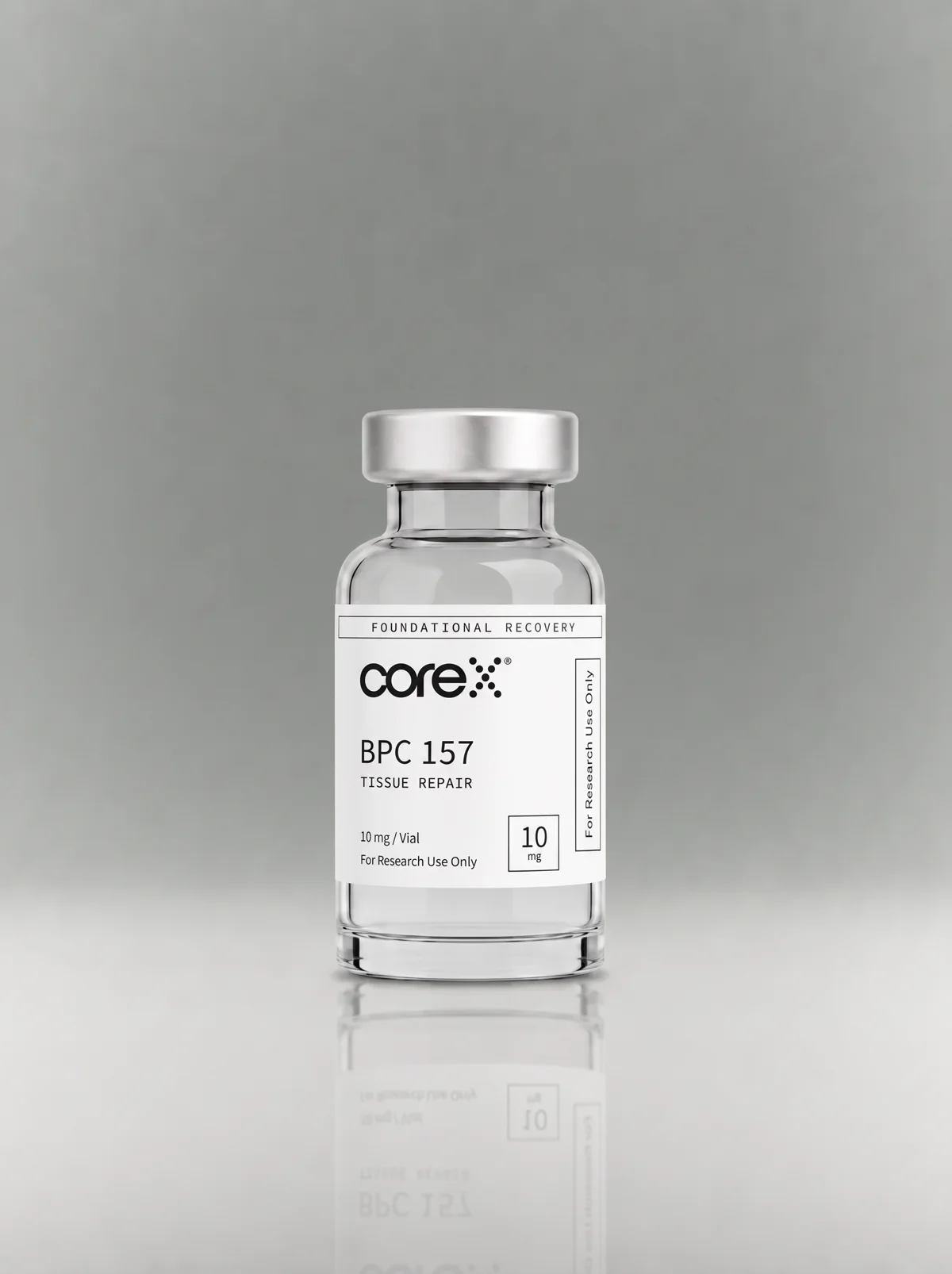
BPC-157 is a synthetic sequence derived from a protein found in gastric juice, while TB-500 is a synthetic fragment of thymosin beta-4. Their studied mechanisms differ. Research on BPC-157 centers on angiogenic signaling, including VEGF-associated pathways, and on the integrity of the intestinal lining. TB-500 is described as binding actin monomers and influencing the cytoskeletal assembly involved in cell migration. BPC-157 has been studied for musculoskeletal soft tissue healing, wound healing and gastroprotection, and one small human report examined knee pain. TB-500 has been studied mainly in animal models, such as rat Achilles tendon healing. For both compounds, human safety data are limited.
Key differences
- 01
BPC-157 research focuses on angiogenic and VEGF-associated signaling, while TB-500 research focuses on binding actin monomers and regulating cytoskeletal organization.
- 02
BPC-157 has been explored for a role in maintaining the intestinal lining under inflammatory stress, whereas TB-500 has been explored for recruiting repair-associated cells toward areas under stress.
- 03
BPC-157 has a small number of limited human reports, including a study of intra-articular injection for knee pain, while published work on TB-500 itself is largely animal research.
- 04
BPC-157 is derived from a gastric juice protein, whereas TB-500 is a fragment of thymosin beta-4, a parent protein that has been discussed more broadly in reviews of regenerative applications.
- 05
Research protocols for BPC-157 have used twice-daily administration, while protocols for TB-500 have used once-weekly administration with a loading phase before a lower-frequency maintenance phase.
Side by side
Tissue repair, VEGFR2, angiogenesis, gut healing
Systemic regeneration, cell migration
Early clinical
Preclinical
Foundation
Foundation
Subcutaneous
Subcutaneous
Research protocols have used 250–1,000 mcg per administration, twice daily, in 8-week blocks with 4 weeks off.
Research protocols have used 500–2,000 mcg per administration, once weekly (morning), with a loading phase before a lower-frequency maintenance phase, in 8-week blocks with 4 weeks off.
- Musculoskeletal soft tissue healing
- Wound healing
- Gastroprotection and gut barrier integrity
- Angiogenic and VEGF-associated signaling in repair
- Knee pain in a small human report
- Applications in orthopaedic sports medicine
- Actin monomer binding and cytoskeletal organization
- Migration of repair-associated cells
- Achilles tendon healing in rat models
- Musculoskeletal injury in peptide therapy reviews
- Thymosin beta-4 in brain organoid research
- Human safety data are limited
- Adverse events are not systematically summarized in the cited studies
- Published reviews have raised questions about potential risks alongside proposed regenerative benefits
- Long-term safety has not been established in controlled human trials
- Human safety data are limited
- Adverse events are not summarized in the cited animal studies
- Discussed among unapproved peptides in a review of safety and efficacy for musculoskeletal injuries
- Supplied for laboratory research use only
5 cited studies
5 cited studies
Studied ranges describe what published research protocols have used. They are not instructions or recommendations. Products are sold for research purposes only; each order ships with a protocol guide for the specific product.
Mechanism
BPC-157
Research investigates BPC-157 for its influence on angiogenic signaling and growth-factor receptor expression at sites of tissue stress, alongside effects on the epithelial lining of the digestive tract.
Angiogenic Signaling
Studied for its relationship with VEGF-associated pathways involved in forming the microvasculature that supports repair.
Gut Barrier
Explored for a role in maintaining the integrity of the intestinal lining under inflammatory stress.
TB-500
Research describes TB-500 as binding actin monomers and influencing the assembly of the cytoskeleton, which is central to how cells move toward a site of tissue stress.
Actin Regulation
Studied for sequestering actin monomers, affecting the cytoskeletal scaffolding cells use to move and reorganize.
Cell Migration
Explored for the recruitment of repair-associated cells toward areas under stress.