GHK-Cu
Last reviewed September 26, 2026
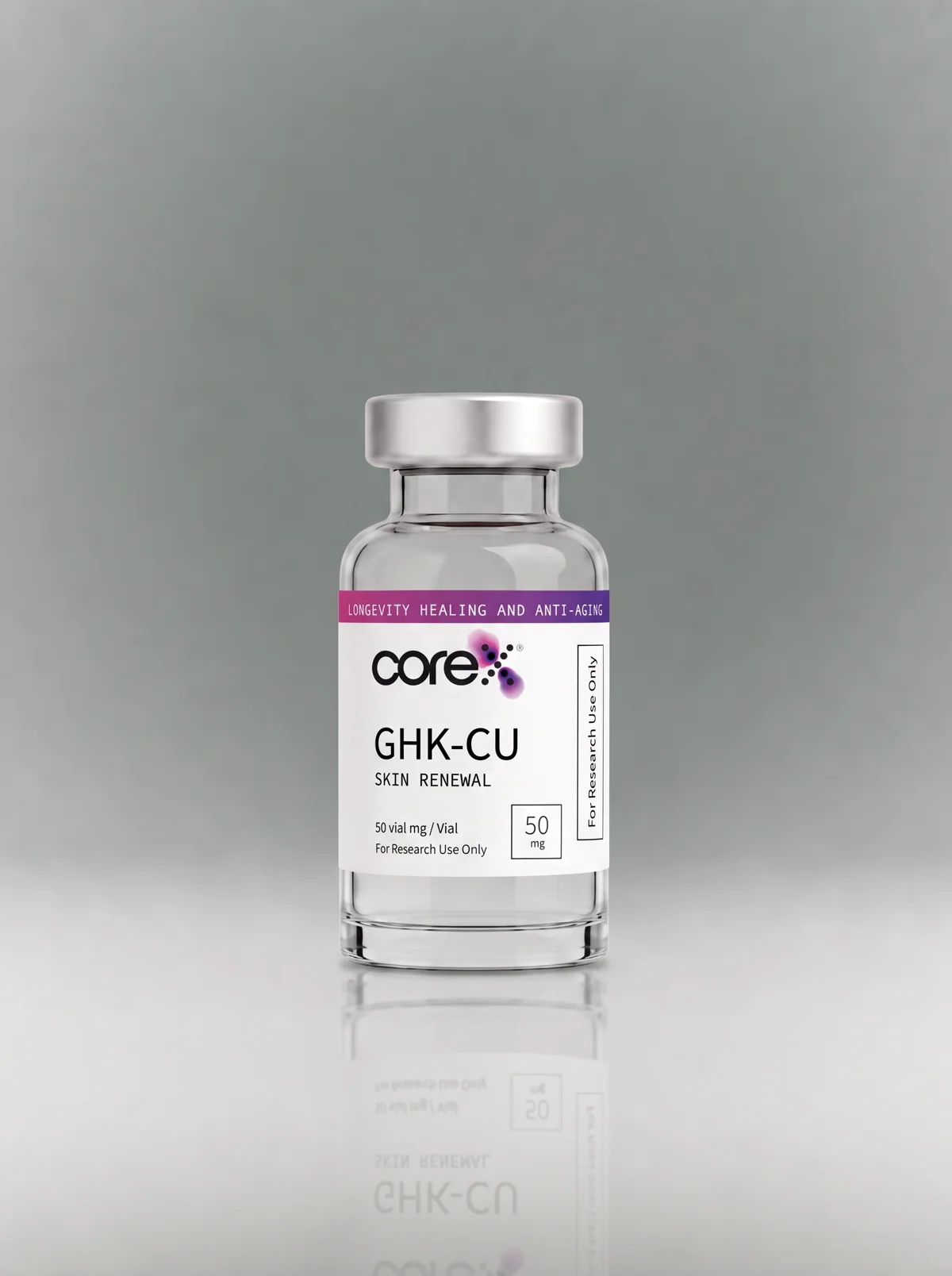
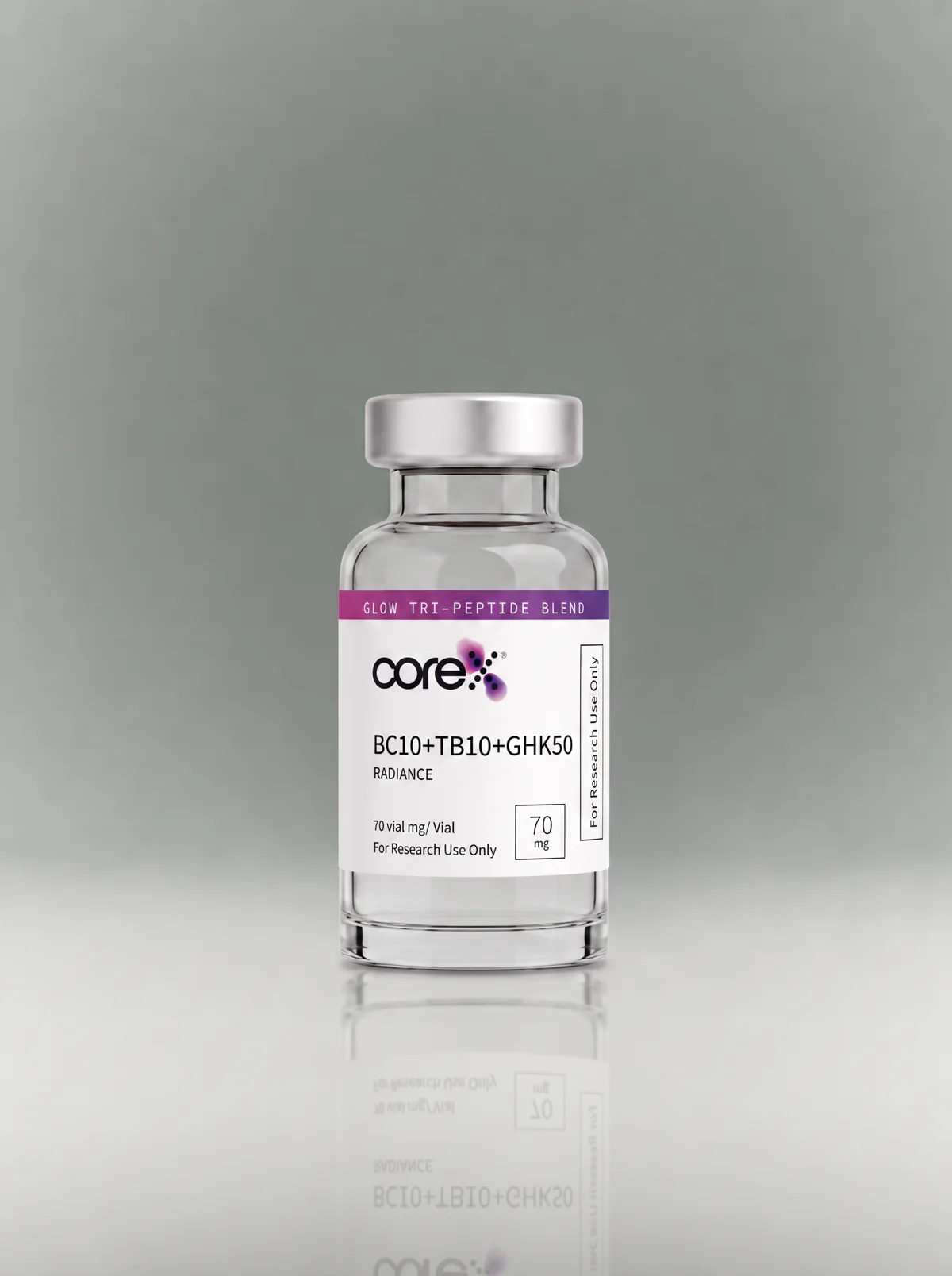
GHK-Cu is a copper-binding tripeptide studied for its role in skin, connective-tissue, and cellular renewal. Its recovery profile gives it a crossover into Foundation.
Mechanism of action
Research describes GHK-Cu as a copper-peptide complex studied for its interaction with fibroblast activity and the remodeling signals associated with skin and connective tissue.
- Copper TransportStudied as a carrier that binds and delivers copper, a cofactor for numerous tissue-remodeling enzymes.
- Dermal SignalingExplored in research on fibroblast activity and the synthesis of collagen and other structural proteins.
- Route studied
- Subcutaneous
- Research status
- Preclinical
Published work on GHK-Cu consists mainly of animal, cell and formulation studies, along with reviews of gene-expression data and topical anti-wrinkle applications; no phase-numbered clinical trials appear in the cited literature.
What the research covers
What research examines
- Wound healing in mouse scald models
- Collagen and structural protein synthesis by fibroblasts
- Topical anti-wrinkle and skin aging research
- Gene-expression effects linked to regenerative and protective actions
- Liposomal delivery and skin permeation for cosmetic use
Reported effects in studies
- Human safety data are limited, particularly for subcutaneous use
- Adverse events are not summarized in the cited GHK-Cu studies
What research protocols have used
Research protocols have used 1–10 mg per administration, once daily (morning), in 12-week blocks with 4 weeks off.
For research use only. These figures summarize published research protocols. They are not instructions or medical advice.
Every CoreX order ships with a per-lot protocol guide.
Open the reconstitution calculatorResearched alongside
Cited research
- Regenerative and Protective Actions of the GHK-Cu Peptide in the Light of the New Gene Data.
International journal of molecular sciences · 2018 · Review · PubMed 29986520
- The potential of GHK as an anti-aging peptide.
Aging pathobiology and therapeutics · 2020 · PubMed 35083444
- Topically applied GHK as an anti-wrinkle peptide: Advantages, problems and prospective.
BioImpacts : BI · 2025 · Review · PubMed 39963574
- GHK-Cu-liposomes accelerate scald wound healing in mice by promoting cell proliferation and angiogenesis.
Wound repair and regeneration : official publication of the Wound Healing Society [and] the European Tissue Repair Society · 2017 · PubMed 28370978
- Liposomes as Carriers of GHK-Cu Tripeptide for Cosmetic Application.
Pharmaceutics · 2023 · PubMed 37896245
Questions about GHK-Cu
GHK-Cu is a copper-binding tripeptide, a small peptide complexed with copper, studied for its role in skin, connective-tissue and cellular renewal. It has been investigated in research on collagen, elastin, skin and follicle support. Because of its tissue-recovery profile, it is grouped with both longevity and foundation research compounds. Much of the literature focuses on skin aging, wound repair and cosmetic formulation, including liposome-based delivery systems.
Research describes GHK-Cu as a copper-peptide complex that interacts with fibroblast activity and the remodeling signals associated with skin and connective tissue. It has been studied as a carrier that binds and delivers copper, a cofactor for numerous tissue-remodeling enzymes. It has also been explored in research on fibroblast signaling and the synthesis of collagen and other structural proteins. Reviews have additionally examined gene-expression data linked to its regenerative and protective actions.
Studies have examined GHK-Cu in several areas. In mice, GHK-Cu-liposomes were reported to accelerate scald wound healing by promoting cell proliferation and angiogenesis. Reviews have discussed its potential as an anti-aging peptide and as a topically applied anti-wrinkle peptide, including advantages and problems. Formulation research has evaluated liposomes as carriers for cosmetic application and methods for measuring skin permeation. Recent reviews also discuss it among peptides of interest in orthopaedic and aesthetic research.
Human safety data for GHK-Cu are limited, particularly for subcutaneous administration. The cited studies focus on animal wound models, cell work, gene-expression analyses and cosmetic formulation, and adverse events are not summarized in them. Broader reviews of approved and unapproved peptide therapies discuss safety considerations across this category of compounds, but well-characterized, compound-specific human safety findings for injectable GHK-Cu have not been established in the cited literature.
Research protocols have used 1 to 10 mg per administration by the subcutaneous route, once daily in the morning, in 12-week blocks followed by 4 weeks off. These figures describe what protocols have used and are not a recommendation. Each CoreX order ships with a protocol guide for laboratory reference. GHK-Cu is supplied for laboratory research use only.
Ask about GHK-Cu
Our research assistant answers questions about the science, the studied ranges, and our products. It can be wrong, and it does not give medical advice.
GHK-Cu at CoreX
Every batch is independently tested for identity and purity, and the certificate of analysis is tied to the lot number on your label.