 Vial
GHK-Cu 50 mg cartridge
Skin renewal
Investigated for fibroblast activity and collagen biology.
$59.00CAD· $1.18/mg
1
- Ships from Canada in 1–2 business days
- Free shipping over $120
Place your order, then send the e-Transfer. We pack it as soon as it arrives.
For research use only. Not for human consumption.
Complete your setup
A cartridge goes in the reusable pen.
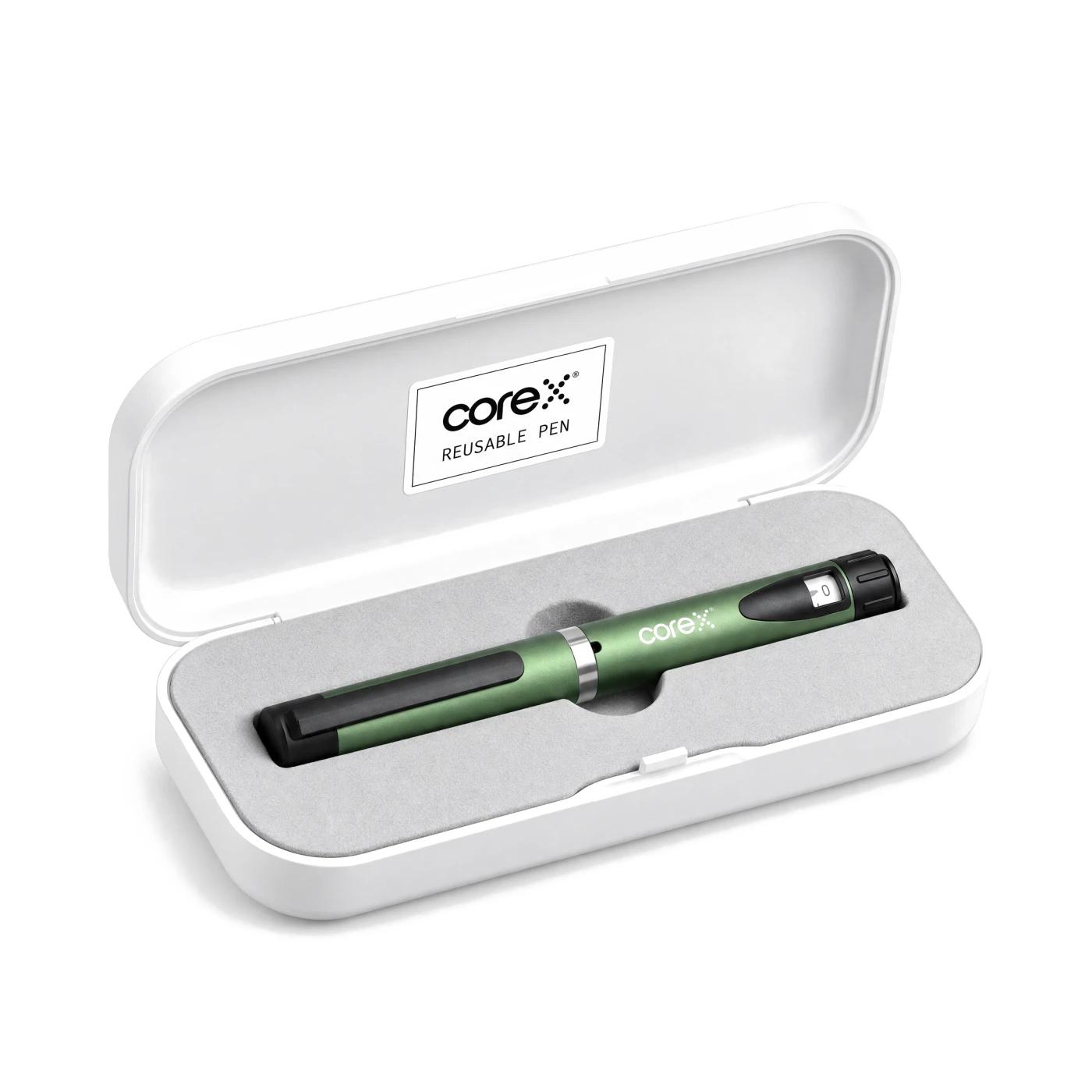
- Reusable Metal Pen
$49.00 · Holds the cartridge · reusable
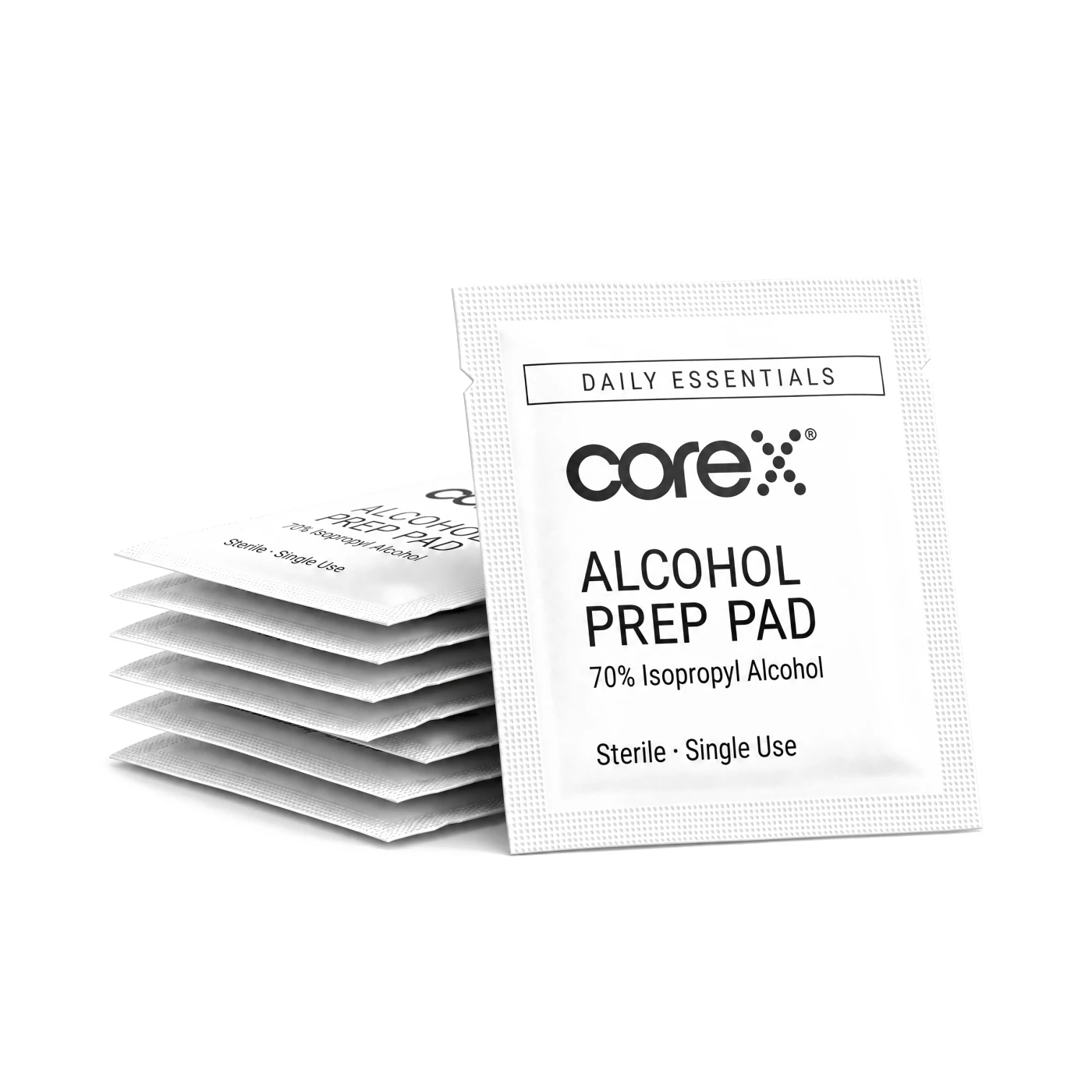
- Alcohol Wipes
Free · To wipe the pen's rubber seal
About GHK-Cu
GHK-Cu is a copper-binding tripeptide studied for its role in skin, connective-tissue, and cellular renewal. Its recovery profile gives it a crossover into Foundation.
How it works
- Copper Transport
- Studied as a carrier that binds and delivers copper, a cofactor for numerous tissue-remodeling enzymes.
- Dermal Signaling
- Explored in research on fibroblast activity and the synthesis of collagen and other structural proteins.
What you need
- Reusable Metal Pen
- Alcohol Wipes
- A protocol guide comes with every order
Shipping & payment
- Packed and dispatched within 1–2 business days
- Delivered across Canada in 2–5 business days, tracked
- Temperature-controlled packaging where the product needs it
- Free shipping on orders over $120
- Prices in CAD · pay by Interac e-Transfer
- Format
- Single cartridge for the reusable CoreX pen
- Strength
- 50 mg per cartridge
- Storage
- Refrigerate, away from light. Once reconstituted, keep refrigerated and use within the window on the insert.
- Route in research
- Subcutaneous
- SKU
- CU50SC
- Purity
- High-performance liquid chromatography (HPLC), by an independent laboratory
- Identity
- Mass spectrometry, on the same batch
- How often
- Every batch
- COA
- The certificate of analysis is matched to the lot code printed on your vial
- Evidence
- Preclinical
Check your lot
Every vial carries a lot code. Enter it, or scan the QR on the label, to see its expiry and certificate of analysis.
PreclinicalPublished work on GHK-Cu consists mainly of animal, cell and formulation studies, along with reviews of gene-expression data and topical anti-wrinkle applications; no phase-numbered clinical trials appear in the cited literature.
What research examines
- Wound healing in mouse scald models
- Collagen and structural protein synthesis by fibroblasts
- Topical anti-wrinkle and skin aging research
- Gene-expression effects linked to regenerative and protective actions
- Liposomal delivery and skin permeation for cosmetic use
Reported in studies
- Human safety data are limited, particularly for subcutaneous use
- Adverse events are not summarized in the cited GHK-Cu studies
Published research protocols
5 mg, daily, am
Research protocols have used 1–10 mg per administration, once daily (morning), in 12-week blocks with 4 weeks off.
For research use only. These figures summarize published research protocols. They are not instructions or medical advice.
Measure with the calculatorCoreX AI
Ask about GHK-Cu
Plain answers, from the basics to the studies.
Research information, not medical advice.
Often researched with GHK-Cu
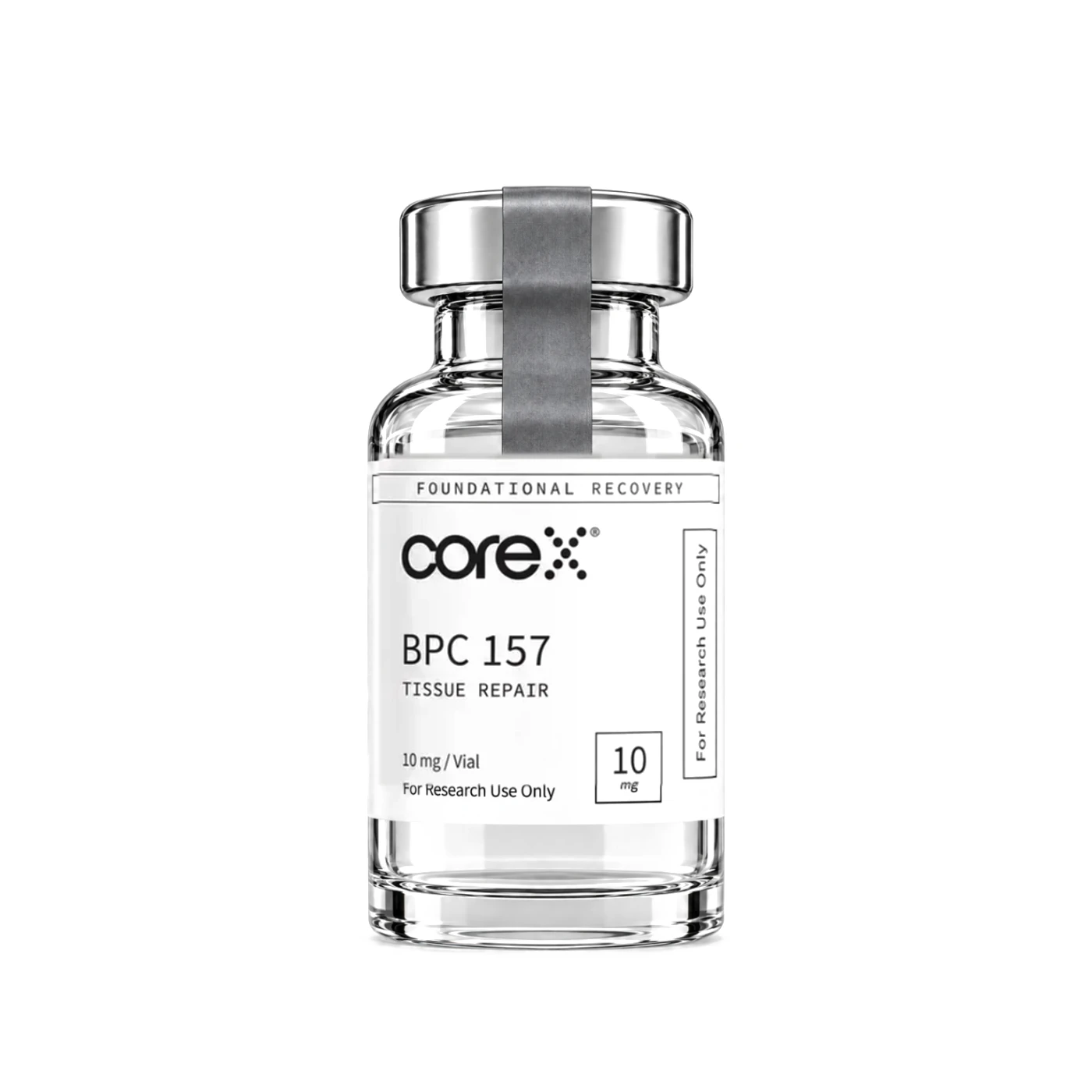
Researched for recovery & repair.
- Vial
 Vial
 Vial
FAQ
Questions, answered
GHK-Cu is a copper-binding tripeptide, a small peptide complexed with copper, studied for its role in skin, connective-tissue and cellular renewal. It has been investigated in research on collagen, elastin, skin and follicle support. Because of its tissue-recovery profile, it is grouped with both longevity and foundation research compounds. Much of the literature focuses on skin aging, wound repair and cosmetic formulation, including liposome-based delivery systems.
Research describes GHK-Cu as a copper-peptide complex that interacts with fibroblast activity and the remodeling signals associated with skin and connective tissue. It has been studied as a carrier that binds and delivers copper, a cofactor for numerous tissue-remodeling enzymes. It has also been explored in research on fibroblast signaling and the synthesis of collagen and other structural proteins. Reviews have additionally examined gene-expression data linked to its regenerative and protective actions.
Studies have examined GHK-Cu in several areas. In mice, GHK-Cu-liposomes were reported to accelerate scald wound healing by promoting cell proliferation and angiogenesis. Reviews have discussed its potential as an anti-aging peptide and as a topically applied anti-wrinkle peptide, including advantages and problems. Formulation research has evaluated liposomes as carriers for cosmetic application and methods for measuring skin permeation. Recent reviews also discuss it among peptides of interest in orthopaedic and aesthetic research.
Human safety data for GHK-Cu are limited, particularly for subcutaneous administration. The cited studies focus on animal wound models, cell work, gene-expression analyses and cosmetic formulation, and adverse events are not summarized in them. Broader reviews of approved and unapproved peptide therapies discuss safety considerations across this category of compounds, but well-characterized, compound-specific human safety findings for injectable GHK-Cu have not been established in the cited literature.
Research protocols have used 1 to 10 mg per administration by the subcutaneous route, once daily in the morning, in 12-week blocks followed by 4 weeks off. These figures describe what protocols have used and are not a recommendation. Each CoreX order ships with a protocol guide for laboratory reference. GHK-Cu is supplied for laboratory research use only.
You may also like
 Pen
 Vial
 Vial
 Vial