GLP-3R
Last reviewed September 26, 2026
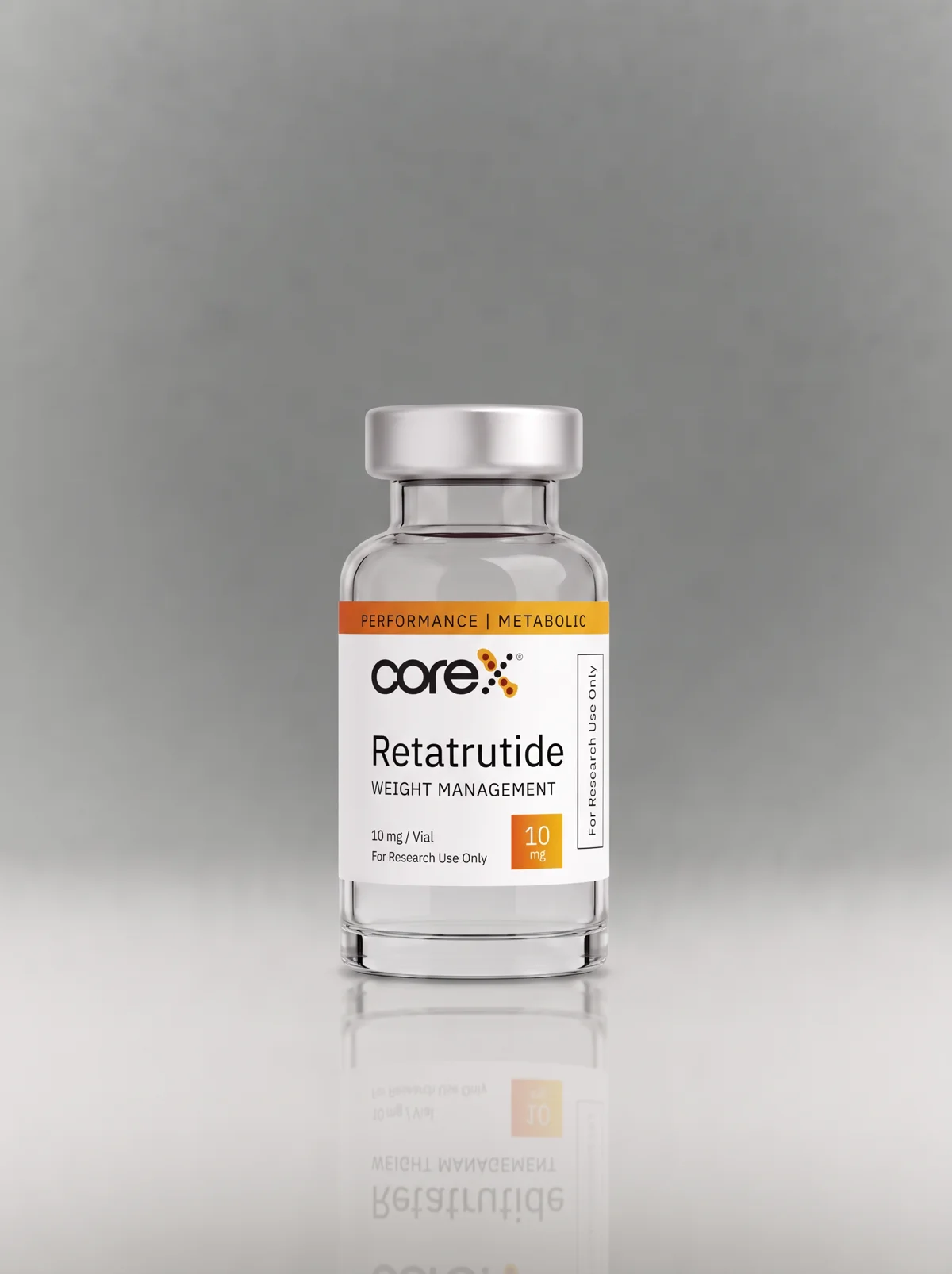
GLP-3R is studied as a triple agonist at the GLP-1, GIP, and glucagon receptors. Research examines whether engaging all three affects metabolic regulation differently to dual or single agonists.
Mechanism of action
Research investigates GLP-3R across three receptors: GLP-1 and GIP for glucose-dependent insulin signaling and satiety, and glucagon for its association with energy expenditure.
- Triple AgonismStudied at three distinct metabolic receptors, the glucagon component being what separates it from dual agonists.
- Energy ExpenditureExplored for whether glucagon receptor activity contributes an expenditure effect alongside appetite signaling.
- Route studied
- Subcutaneous
- Receptor class
- GLP-1R / GIPR / GCGR
- Research status
- Late clinical
GLP-3R has progressed through phase 2 trials in obesity and metabolic dysfunction-associated steatotic liver disease and has been evaluated in a published randomized phase 3 trial in type 2 diabetes, with further registrational trials described.
What the research covers
What research examines
- Body weight reduction in adults with obesity
- Glycemic control in type 2 diabetes
- Liver fat in metabolic dysfunction-associated steatotic liver disease
- Obstructive sleep apnea and knee osteoarthritis in registrational trial designs
- Glucagon receptor contribution to energy expenditure
Reported effects in studies
- Safety has been assessed in randomized phase 2 and phase 3 trials, though specific adverse events are not summarized on this page
- Long-term human safety data remain limited while registrational trials continue
- No regulatory approval for any indication has been reported
What research protocols have used
Research protocols have used 500–4,000 mcg per administration, once weekly (morning, fasted), stepping up from 1 mg to 4 mg by week 9. Reported cycle: continuous until target weight loss; long-term non-weight-loss model: 1mg weekly.
For research use only. These figures summarize published research protocols. They are not instructions or medical advice.
Every CoreX order ships with a per-lot protocol guide.
Open the reconstitution calculatorResearched alongside
Cited research
- Triple-Hormone-Receptor Agonist Retatrutide for Obesity - A Phase 2 Trial.
The New England journal of medicine · 2023 · RCT · PubMed 37366315
- Efficacy and safety of retatrutide, a GIP, GLP-1, and glucagon receptor agonist, in people with type 2 diabetes and inadequate glycaemic control with diet and exercise (TRANSCEND-T2D-1): a double-blind, randomised, phase 3 trial.
Lancet (London, England) · 2026 · RCT · PubMed 42250575
- Triple hormone receptor agonist retatrutide for metabolic dysfunction-associated steatotic liver disease: a randomized phase 2a trial.
Nature medicine · 2024 · RCT · PubMed 38858523
- LY3437943, a novel triple glucagon, GIP, and GLP-1 receptor agonist for glycemic control and weight loss: From discovery to clinical proof of concept.
Cell metabolism · 2022 · PubMed 35985340
- Retatrutide for the treatment of obesity, obstructive sleep apnea and knee osteoarthritis: Rationale and design of the TRIUMPH registrational clinical trials.
Diabetes, obesity & metabolism · 2026 · PubMed 41090431
Questions about GLP-3R
GLP-3R is a research peptide studied as a triple agonist at the GLP-1, GIP, and glucagon receptors. Research examines whether engaging all three receptors affects metabolic regulation differently from dual or single agonists. It has been evaluated in randomized clinical trials for obesity, type 2 diabetes, and metabolic dysfunction-associated steatotic liver disease, and is sold by CoreX for laboratory research use only.
Research investigates GLP-3R across three receptors. GLP-1 and GIP receptor activity is associated with glucose-dependent insulin signaling and satiety, while glucagon receptor activity is associated with energy expenditure. Studies explore whether the glucagon component adds an expenditure effect alongside appetite signaling, which is the main feature distinguishing it from dual GLP-1/GIP agonists.
Published work includes a phase 2 randomized trial in obesity, a phase 2a randomized trial in metabolic dysfunction-associated steatotic liver disease, and a double-blind randomized phase 3 trial in people with type 2 diabetes and inadequate glycemic control on diet and exercise. Registrational trials have also been designed to examine obesity, obstructive sleep apnea, and knee osteoarthritis.
Safety outcomes were assessed in the phase 2 and phase 3 randomized trials, but the specific adverse event profile is not summarized on this page. Long-term human safety data remain limited, and larger registrational trials are ongoing. No regulatory approval has been reported, and GLP-3R supplied by CoreX is intended for laboratory research use only.
Research protocols have used 500 to 4,000 mcg per administration by subcutaneous route, once weekly (morning, fasted), stepping up from 1 mg to 4 mg by week 9. The reported cycle continued until target weight loss, and a long-term non-weight-loss model used 1 mg weekly. Each CoreX order ships with a protocol guide for laboratory reference.
Ask about GLP-3R
Our research assistant answers questions about the science, the studied ranges, and our products. It can be wrong, and it does not give medical advice.
GLP-3R at CoreX
Every batch is independently tested for identity and purity, and the certificate of analysis is tied to the lot number on your label.