NAD+ vs MOTS-c
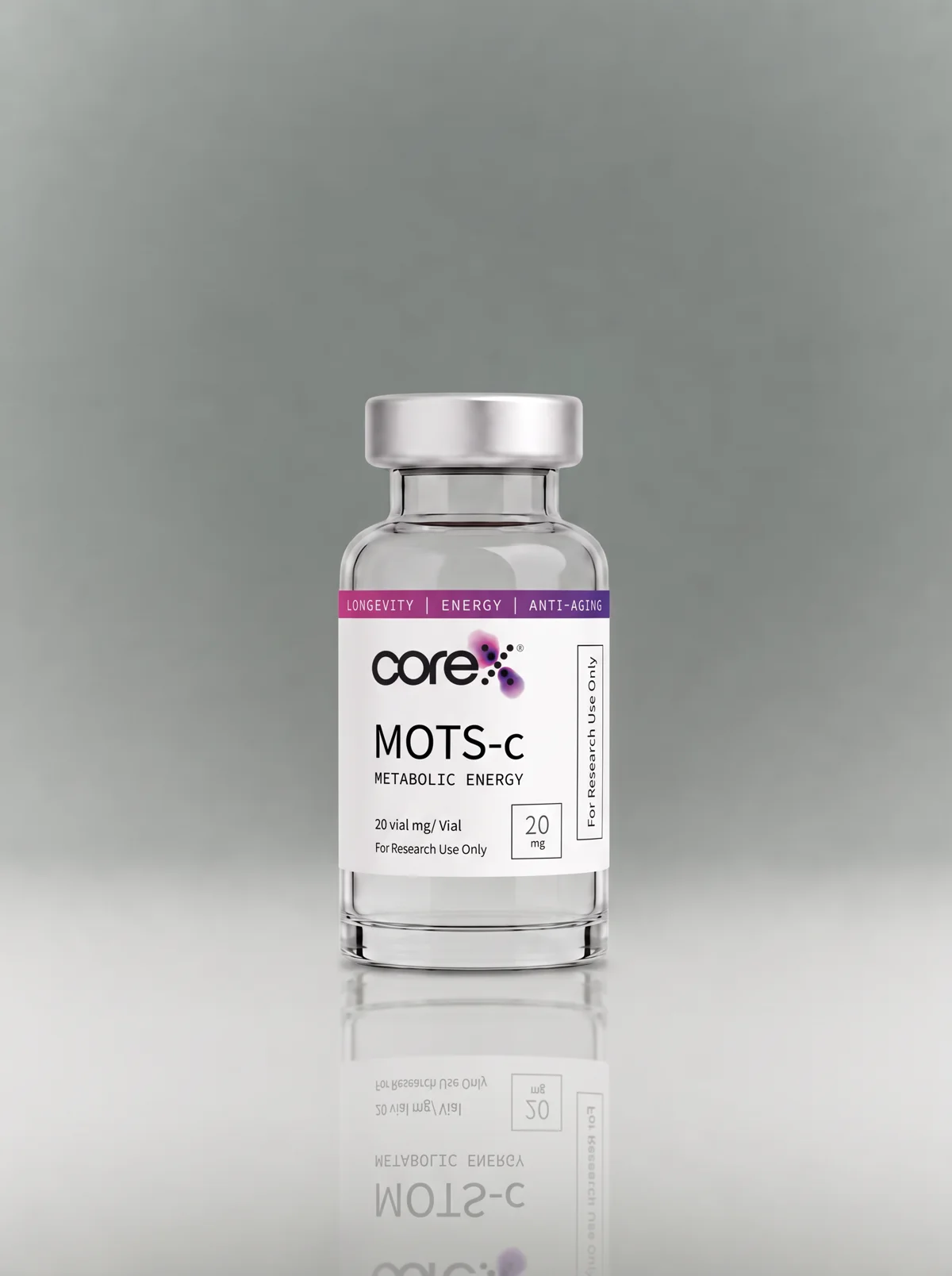
NAD+ and MOTS-c are both studied in longevity and metabolic research, but they differ in kind. NAD+ is a coenzyme that acts as an electron carrier in the reactions releasing energy from nutrients and serves as a required substrate for sirtuin enzymes. MOTS-c is a peptide encoded in mitochondrial DNA, described as translocating to the nucleus under metabolic stress, where it is studied for effects on metabolic genes largely via AMPK-associated pathways. NAD+ has been studied for cellular energy metabolism, sirtuin activity, and aging-related metabolic decline and neurodegeneration. MOTS-c has been studied mainly in animal and cell models of obesity, insulin resistance, bone metabolism, and lung injury. Human safety data are limited for both.
Key differences
- 01
NAD+ is a coenzyme involved in redox reactions throughout the cell, whereas MOTS-c is a peptide encoded within mitochondrial DNA and studied as a mitochondria-to-nucleus signal.
- 02
NAD+ is studied mechanistically as an electron carrier and sirtuin substrate, while MOTS-c research centers on AMPK-associated pathways and nuclear gene regulation under metabolic stress.
- 03
NAD+ is classed as early-clinical, with small randomized human trials of the precursor NMN reported, while MOTS-c research remains preclinical, consisting mainly of animal and cell studies and reviews.
- 04
Research protocols for NAD+ have used 50–200 mg per administration three times per week on a continuous cycle, whereas MOTS-c protocols have used 500–5,000 mcg per administration three times per week in 8-week blocks with 4 weeks off.
- 05
NAD+ research extends to neurodegeneration and blood-brain barrier integrity in aging animal models, while MOTS-c research has examined bone metabolism, lung ischemia-reperfusion injury, and ovarian cancer progression in laboratory studies.
Side by side
Cellular energy, sirtuin activation, DNA repair
Mitochondrial activation, metabolic flexibility
Early clinical
Preclinical
Longevity
Longevity
Subcutaneous
Subcutaneous
Research protocols have used 50–200 mg per administration, 3 times per week (morning). Reported cycle: continuous.
Research protocols have used 500–5,000 mcg per administration, 3 times per week (morning, fasted), in 8-week blocks with 4 weeks off.
- Cellular energy metabolism and redox reactions
- Sirtuin activity in aging and disease
- Aging-related metabolic decline and neurodegeneration
- Blood-brain barrier integrity in aging animal models
- Muscle insulin sensitivity in human trials of the precursor NMN
- Metabolic homeostasis, obesity and insulin resistance in animal models
- Hyperglycemia and insulin resistance in gestational diabetes research
- Pancreatic islet cell senescence and diabetes onset
- Bone metabolism regulation
- Lung ischemia-reperfusion injury and antioxidant gene activation
- Ovarian cancer progression in laboratory studies
- Human safety data for subcutaneous NAD+ are limited
- Safety of the precursor NMN has been reviewed across human clinical trials
- A review has raised safety questions about NMN marketed as an anti-aging product
- Adverse events for NAD+ itself are not summarized in the cited studies
- Human safety data are limited
- Adverse events are not summarized in the cited studies
- Long-term effects in humans have not been characterized
5 cited studies
5 cited studies
Studied ranges describe what published research protocols have used. They are not instructions or recommendations. Products are sold for research purposes only; each order ships with a protocol guide for the specific product.
Mechanism
NAD+
NAD+ acts as an electron carrier in the reactions that release energy from nutrients. It is also a required substrate for sirtuins, enzymes studied for metabolic regulation and cellular maintenance.
Redox Carrier
Cycles between oxidized and reduced forms to shuttle electrons through the reactions generating cellular energy.
Sirtuin Substrate
Consumed by sirtuin enzymes, linking NAD+ availability to signaling around mitochondrial upkeep and stress response.
MOTS-c
Research describes MOTS-c as translocating to the nucleus under metabolic stress, where it is studied for effects on genes governing metabolic homeostasis, largely via AMPK-associated pathways.
Mitochondrial Origin
Encoded within mitochondrial DNA and studied as a signal between the mitochondria and the rest of the cell.
Metabolic Response
Explored in research on AMPK-associated pathways governing how cells manage energy availability and stress.