CJC-1295 vs Sermorelin
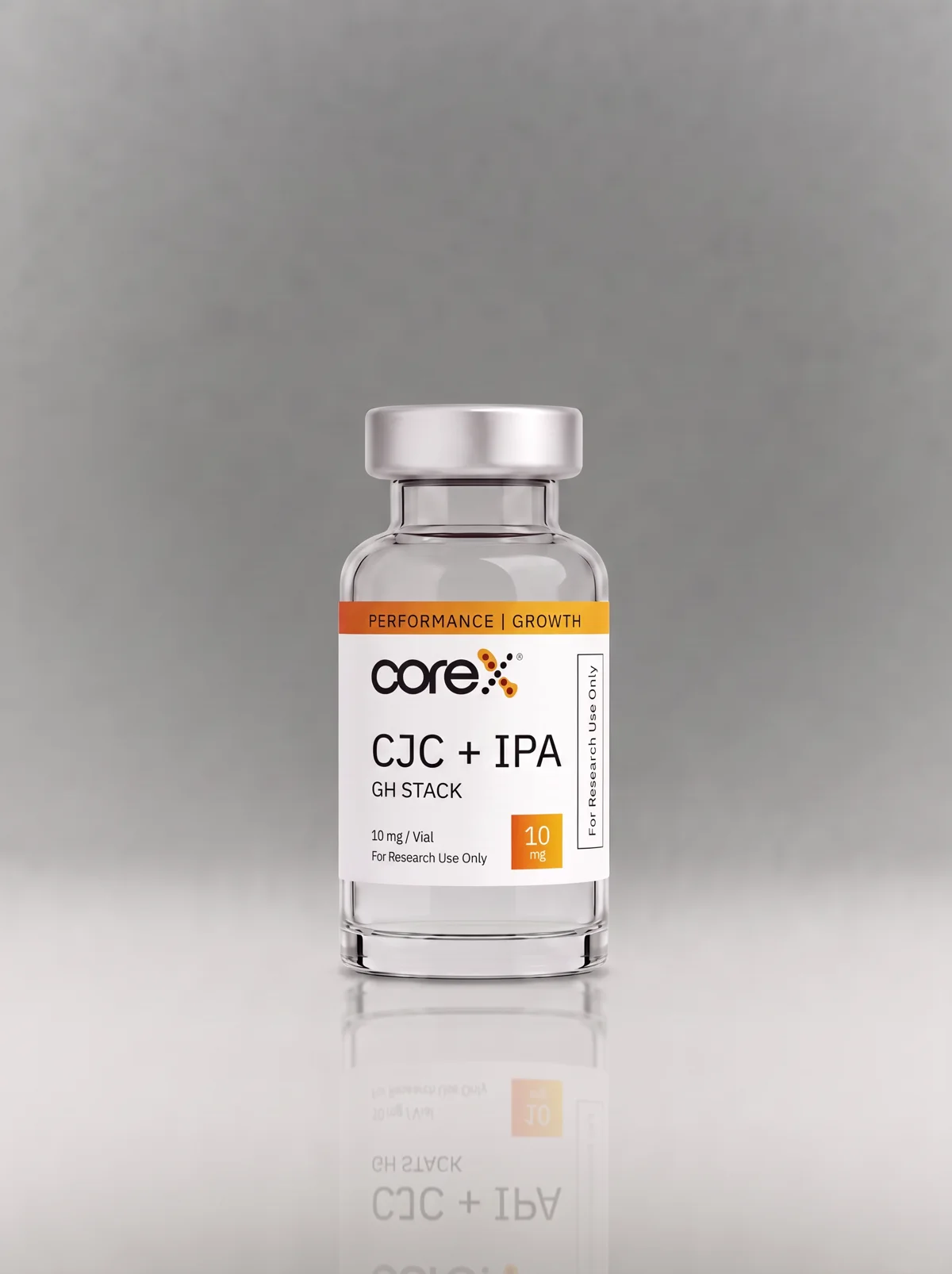
CJC-1295 and Sermorelin are both growth-hormone-releasing hormone (GHRH) analogs that act on the pituitary GHRH receptor. CJC-1295 without DAC, also called modified GRF 1-29, is described in research as a short-acting analog; lacking a drug affinity complex keeps its action brief, which research associates with preserving natural pulsatile growth hormone release. Its human evidence is early, drawn mainly from reviews, anti-doping detection work, and a small trial of the long-acting DAC form. Published reviews describe clinical use of Sermorelin in diagnosing and treating idiopathic growth hormone deficiency in children, and it continues to be discussed in research on adult-onset growth hormone insufficiency and other areas.
Key differences
- 01
Research on CJC-1295 without DAC emphasizes its short half-life and preservation of pulsatile growth hormone release, whereas published work on Sermorelin centers on its clinical use in pediatric growth hormone deficiency.
- 02
Sermorelin is classed as an approved analog with reviews describing clinical use in children with idiopathic growth hormone deficiency, while CJC-1295 is at an early-clinical stage with limited human data specific to the no-DAC form.
- 03
The main human trial evidence associated with CJC-1295 comes from a randomized controlled trial of the long-acting DAC form in healthy adults, while the no-DAC form appears mainly in reviews and anti-doping detection research.
- 04
Sermorelin research extends to exploratory work in recurrent glioma and to PEGylation of GHRH analogues, whereas CJC-1295 is discussed mainly in sports medicine, orthopaedic, and healthy-aging peptide reviews.
- 05
Research protocols have used 100–300 mcg per administration pre-sleep for CJC-1295 and 200–500 mcg per administration in the evening for Sermorelin, both 5 days per week in 12-week blocks with 4 weeks off.
Side by side
GHRH analog — raises GH released per pulse
Sermorelin is a research compound.
Early clinical
Approved analog
Performance
GHRH-R
Subcutaneous
Subcutaneous
Research protocols have used 100–300 mcg per administration, 5 days per week (pre-sleep), in 12-week blocks with 4 weeks off.
Research protocols have used 200–500 mcg per administration, 5 days per week (evening), in 12-week blocks with 4 weeks off.
- Growth hormone release through GHRH receptor signaling
- Preservation of natural pulsatile growth hormone release
- GH and IGF-I secretion in healthy adults (long-acting DAC form)
- Discussion in sports medicine and orthopaedic peptide reviews
- Discussion in healthy-aging peptide reviews
- Analytical detection of GHRH analogs in anti-doping testing
- Diagnosis of idiopathic growth hormone deficiency in children
- Treatment of idiopathic growth hormone deficiency in children
- Adult-onset growth hormone insufficiency
- Recurrent glioma (exploratory research)
- Analytical detection and serum stability of GHRH analogs
- PEGylation of GHRH analogues
- Human safety data specific to the no-DAC form are limited
- Adverse events are not summarized in the cited titles
- Reviews discuss safety questions around unapproved peptide therapies
- GHRH synthetic analogs are targeted by anti-doping detection methods and have been identified in seized doping material
- Adverse events are not summarized in the cited studies
- Human safety data outside pediatric growth hormone deficiency research are limited
- Synthetic GHRH analogs are targets of anti-doping detection methods
- Enzymatic and serum degradation of GHRH-related peptides has been characterized
5 cited studies
5 cited studies
Studied ranges describe what published research protocols have used. They are not instructions or recommendations. Products are sold for research purposes only; each order ships with a protocol guide for the specific product.
Mechanism
CJC-1295
Research describes it as a GHRH analog acting on pituitary receptors, with the absence of the drug affinity complex keeping its action brief rather than sustained.
GHRH Pathway
Studied as a releasing-hormone analog acting on the pituitary receptors that govern natural hormone pulses.
Short Half-Life
Without DAC its action is brief, which research associates with preserving the body's own pulsatile rhythm.