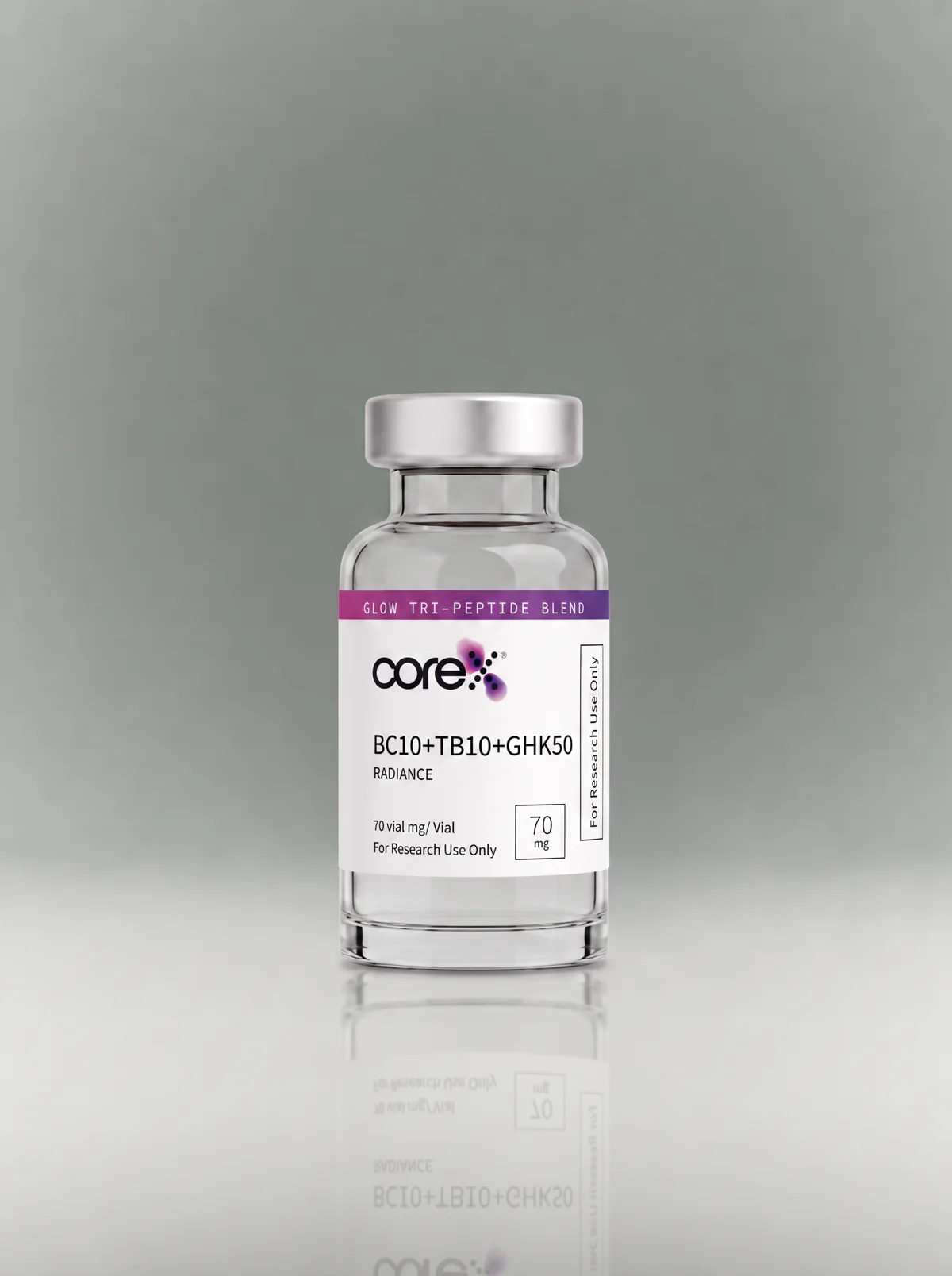
Glow (BPC-157 + TB-500 + GHK-Cu)
Also known as BPC-157 + TB-500 + GHK-Cu, Glow Blend
Last reviewed September 26, 2026
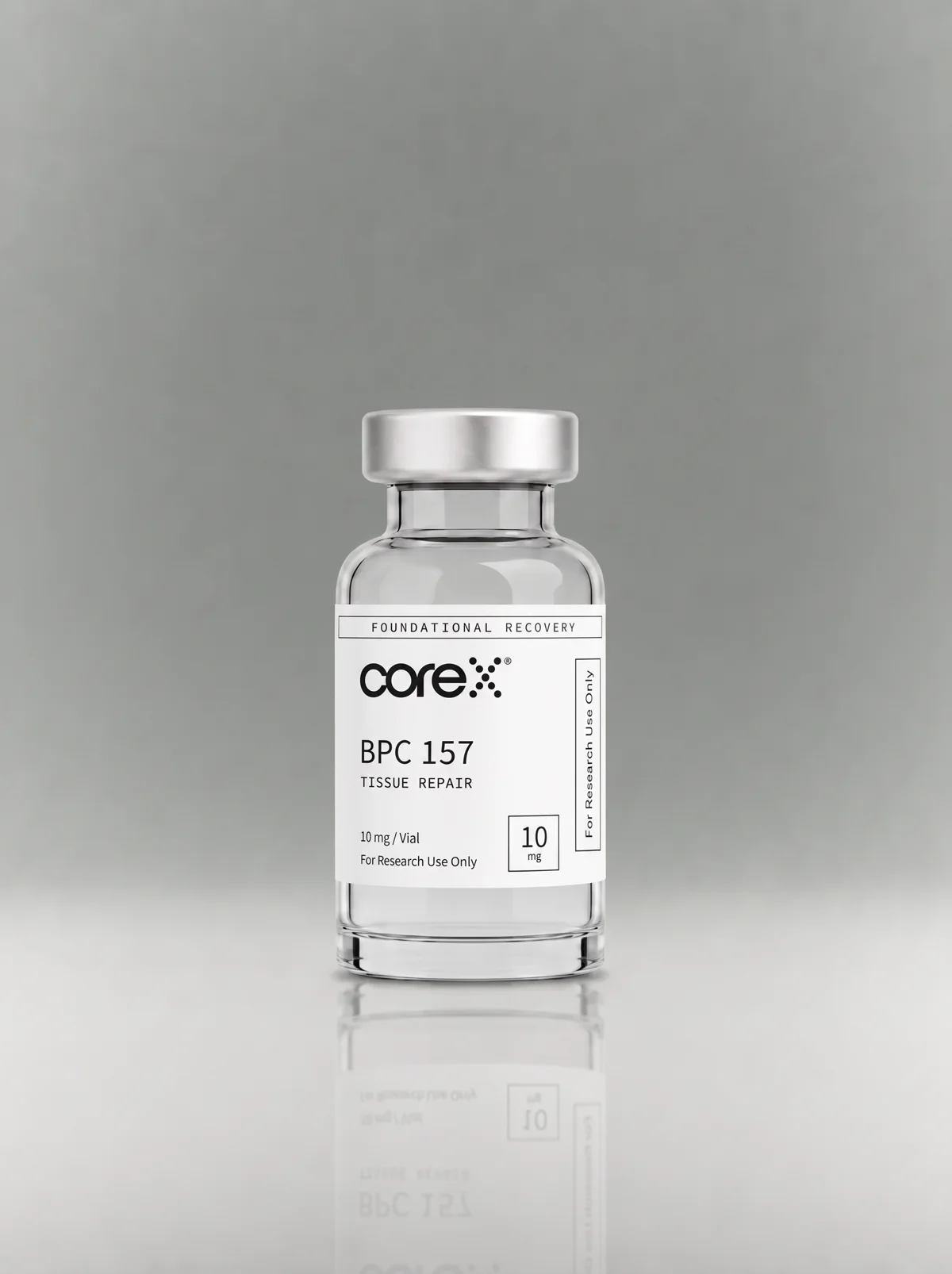
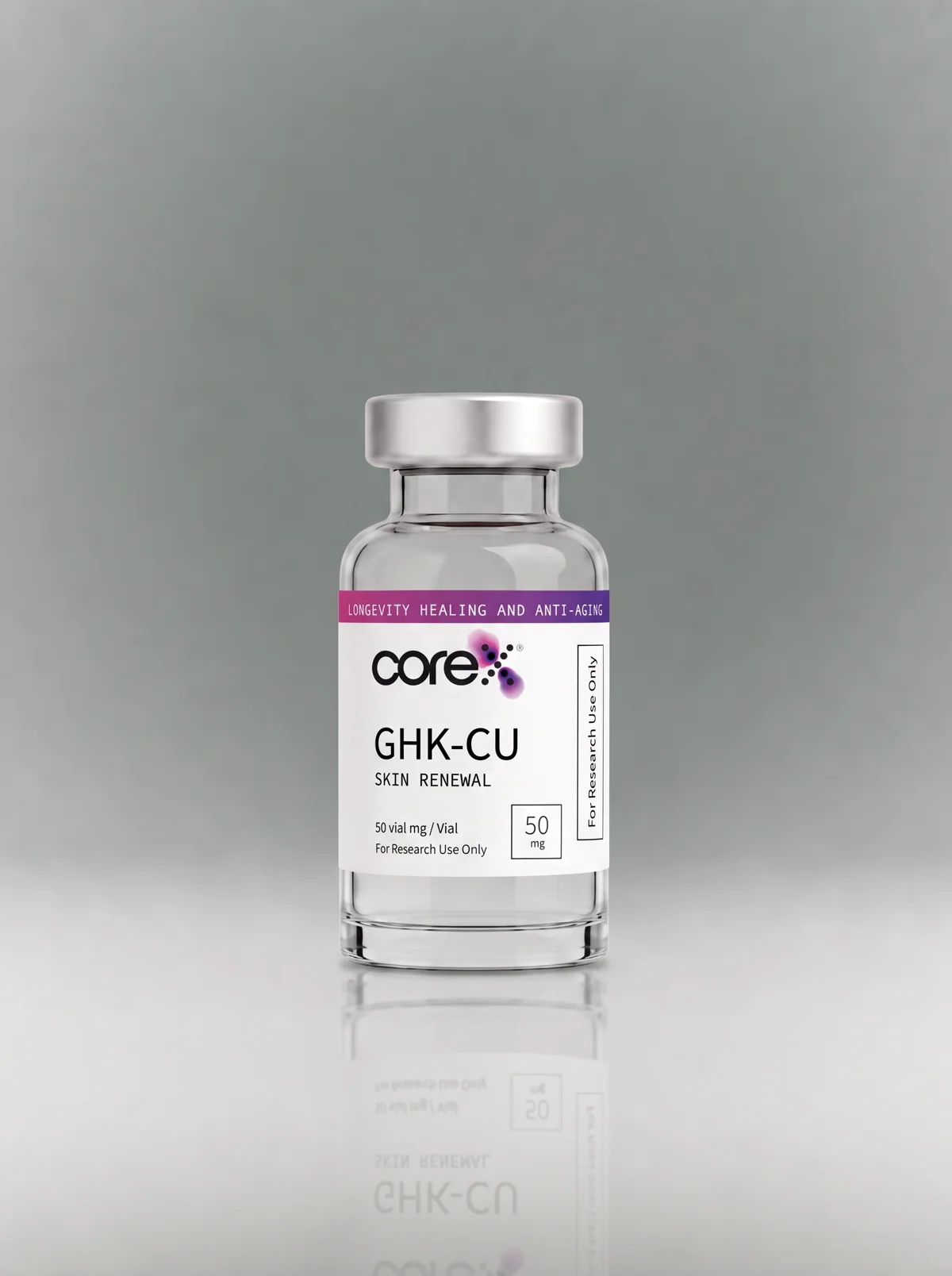
Glow combines BPC-157, TB-500, and GHK-Cu, pairing two repair-associated peptides with the copper peptide most studied for skin and connective-tissue renewal.
Mechanism of action
The blend spans repair signaling and structural remodeling: angiogenic and epithelial pathways, actin regulation, and copper-dependent collagen biology.
- Repair Plus RenewalCombines compounds studied for tissue recovery with one studied specifically for dermal and structural protein synthesis.
- Crossover ProfileSits across Longevity and Foundation, reflecting the mixed repair and renewal focus of its components.
- Route studied
- Subcutaneous
- Research status
- Preclinical
The Glow combination itself has not been evaluated in published clinical trials, and research on its components consists mainly of animal and cell studies and reviews, with only limited small human reports for BPC-157.
What the research covers
What research examines
- Soft tissue and musculoskeletal healing in animal models (BPC-157)
- Wound healing and epithelial repair (BPC-157)
- Actin regulation and tissue recovery signaling (TB-500)
- Copper-dependent collagen synthesis and skin remodeling (GHK-Cu)
- Gene expression and anti-aging research (GHK-Cu)
Reported effects in studies
- Human safety data for the combined blend are limited
- Adverse events are not summarized for the combination in published studies
- Reviews of BPC-157 have weighed its regenerative potential against unresolved safety questions
- Long-term safety of the individual component peptides in humans has not been established
What research protocols have used
Research protocols have used 1.75–3.5 mg per administration, once daily (morning), with a loading phase before a lower-frequency maintenance phase, in 8-week blocks with 4 weeks off.
For research use only. These figures summarize published research protocols. They are not instructions or medical advice.
Every CoreX order ships with a per-lot protocol guide.
Open the reconstitution calculatorCited research
- Multifunctionality and Possible Medical Application of the BPC 157 Peptide-Literature and Patent Review.
Pharmaceuticals (Basel, Switzerland) · 2025 · Review · PubMed 40005999
- Stable Gastric Pentadecapeptide BPC 157 and Wound Healing.
Frontiers in pharmacology · 2021 · Review · PubMed 34267654
- Gastric pentadecapeptide body protection compound BPC 157 and its role in accelerating musculoskeletal soft tissue healing.
Cell and tissue research · 2019 · Review · PubMed 30915550
- Regeneration or Risk? A Narrative Review of BPC-157 for Musculoskeletal Healing.
Current reviews in musculoskeletal medicine · 2025 · Review · PubMed 40789979
- Regenerative and Protective Actions of the GHK-Cu Peptide in the Light of the New Gene Data.
International journal of molecular sciences · 2018 · Review · PubMed 29986520
Questions about Glow (BPC-157 + TB-500 + GHK-Cu)
Glow, also called the Glow Blend, is a research blend combining three peptides: BPC-157, TB-500, and GHK-Cu. It pairs two peptides associated with tissue repair research with GHK-Cu, the copper peptide most studied for skin and connective-tissue renewal. It is categorized across longevity and foundation research areas, reflecting a mixed focus on repair and structural renewal. It is supplied for laboratory research use only.
The blend spans repair signaling and structural remodeling. BPC-157 has been studied in relation to angiogenic and epithelial pathways, TB-500 is associated with actin regulation, and GHK-Cu is linked to copper-dependent collagen biology. The rationale is that compounds studied for tissue recovery are combined with one studied specifically for dermal and structural protein synthesis. These mechanisms come from research on the individual components rather than on the combined blend.
BPC-157 has been reviewed for wound healing and musculoskeletal soft tissue healing, largely in animal models, with a small report on intra-articular use for knee pain. GHK-Cu has been studied for regenerative and protective actions, including gene expression data and its potential as an anti-aging peptide. TB-500 research centers on actin-related tissue repair. The three-peptide combination has not been evaluated as a unit in published studies.
Human safety data for the Glow combination are limited, and adverse events are not summarized for the blend in published studies. Recent reviews of BPC-157 have framed its use as a question of regeneration versus risk, noting that clinical evidence remains thin. Long-term human safety for the individual components has not been established, so safety conclusions drawn from animal and cell studies should be treated cautiously.
Research protocols have used 1.75 to 3.5 mg per administration, once daily in the morning, by the subcutaneous route. These protocols describe a loading phase followed by a lower-frequency maintenance phase, run in 8-week blocks with 4 weeks off. These figures describe research protocols only and are not recommendations. Each CoreX order ships with a protocol guide for laboratory reference.
Ask about Glow (BPC-157 + TB-500 + GHK-Cu)
Our research assistant answers questions about the science, the studied ranges, and our products. It can be wrong, and it does not give medical advice.
Glow (BPC-157 + TB-500 + GHK-Cu) at CoreX
Every batch is independently tested for identity and purity, and the certificate of analysis is tied to the lot number on your label.

Longevity
$189.00