Ipamorelin vs Sermorelin
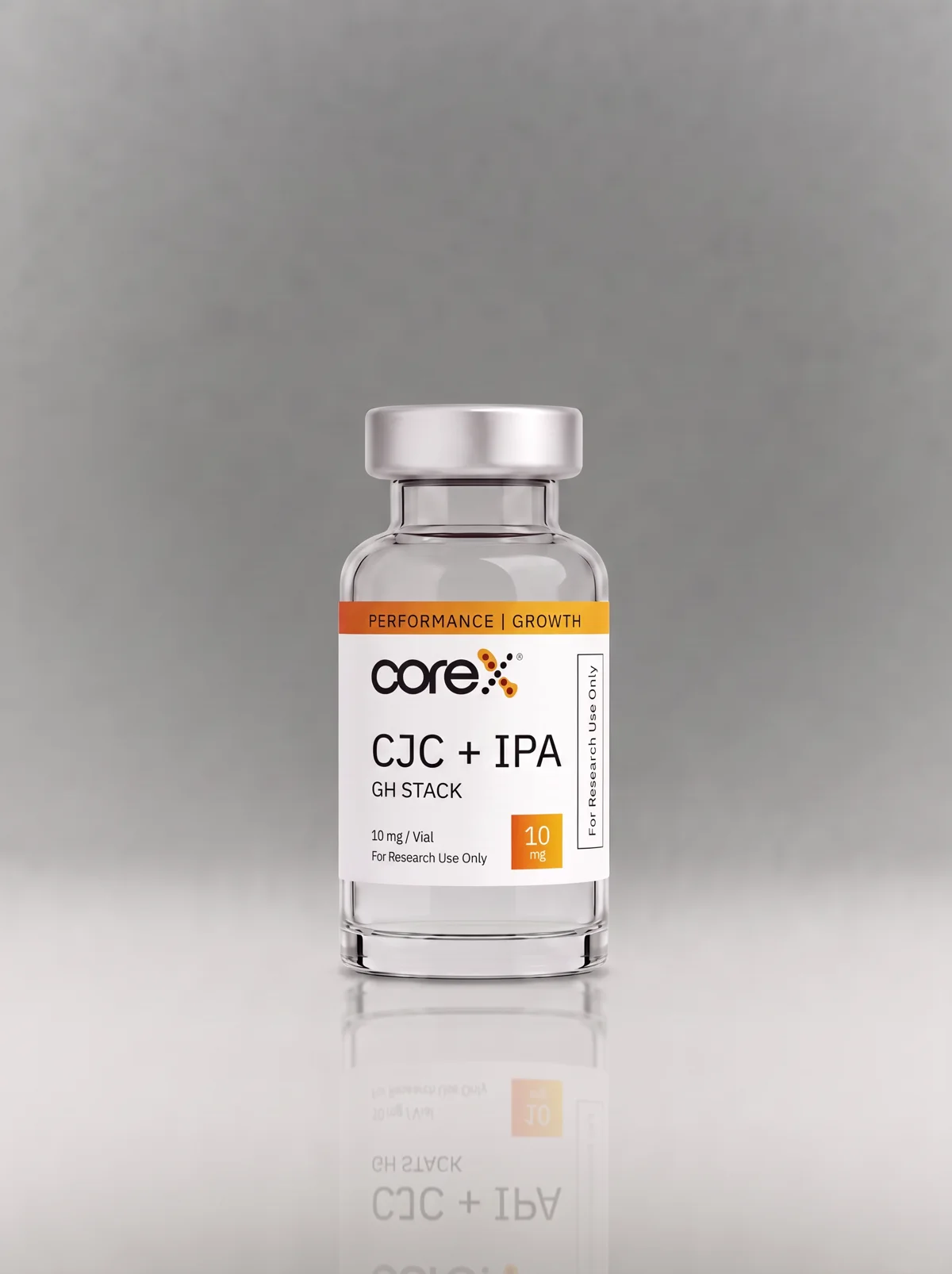
Ipamorelin and Sermorelin are both peptides studied for stimulating growth hormone release, but they act through different receptors. Ipamorelin is a selective growth hormone secretagogue described as a ghrelin receptor (GHS-R1a) agonist, examined for releasing growth hormone with minimal effect on cortisol or prolactin. Its primary studies are animal studies of growth hormone release and bone growth. Sermorelin is a synthetic GHRH analog that acts at the GHRH receptor (GHRH-R). Published reviews describe its clinical use in the diagnosis and treatment of idiopathic growth hormone deficiency in children, and it continues to be discussed in research on adult-onset growth hormone insufficiency. Human safety data are limited for Ipamorelin, and for Sermorelin outside pediatric research.
Key differences
- 01
Ipamorelin is studied as an agonist of the ghrelin receptor (GHS-R1a), while Sermorelin is a GHRH analog that acts at the GHRH receptor (GHRH-R).
- 02
Ipamorelin remains at a preclinical stage with limited controlled human evidence, whereas Sermorelin has a documented clinical history in pediatric growth hormone deficiency.
- 03
Research on Ipamorelin centers on selective growth hormone release, minimal cortisol and prolactin response, and bone growth in rats, while Sermorelin research spans diagnosis and treatment of childhood growth hormone deficiency, adult-onset insufficiency, and exploratory glioma work.
- 04
Both peptides are administered subcutaneously in research, but reported protocols for Ipamorelin have used 8-week blocks with 4 weeks off, compared with 12-week blocks with 4 weeks off for Sermorelin.
- 05
Sermorelin literature includes analytical work on serum stability, enzymatic degradation, and PEGylation of GHRH analogs, while Ipamorelin reviews focus more on its status among unapproved peptides and its discussion in sport and doping contexts.
Side by side
Selective GHRP — clean GH pulse
Sermorelin is a research compound.
Preclinical
Approved analog
Performance
GHRH-R
Subcutaneous
Subcutaneous
Research protocols have used 200–500 mcg per administration, 5 days per week (evening, fasted), in 8-week blocks with 4 weeks off.
Research protocols have used 200–500 mcg per administration, 5 days per week (evening), in 12-week blocks with 4 weeks off.
- Selective growth hormone release
- Minimal cortisol and prolactin response
- Longitudinal bone growth in rats
- Body composition in reviews of GH secretagogues
- Musculoskeletal and sports medicine peptide research
- Diagnosis of idiopathic growth hormone deficiency in children
- Treatment of idiopathic growth hormone deficiency in children
- Adult-onset growth hormone insufficiency
- Recurrent glioma (exploratory research)
- Analytical detection and serum stability of GHRH analogs
- PEGylation of GHRH analogues
- Human safety data are limited
- Early research reported minimal effects on cortisol and prolactin
- Recent reviews assess it among unapproved peptide therapies
- Reviews discuss its use in sport and bodybuilding in a doping context
- Adverse events are not summarized in the cited studies
- Human safety data outside pediatric growth hormone deficiency research are limited
- Synthetic GHRH analogs are targets of anti-doping detection methods
- Enzymatic and serum degradation of GHRH-related peptides has been characterized
5 cited studies
5 cited studies
Studied ranges describe what published research protocols have used. They are not instructions or recommendations. Products are sold for research purposes only; each order ships with a protocol guide for the specific product.
Mechanism
Ipamorelin
Research describes ipamorelin as a ghrelin receptor agonist studied for stimulating growth hormone release without the broader hormonal activity of earlier secretagogues.
Receptor Selectivity
Studied for acting at the ghrelin receptor with minimal associated cortisol or prolactin response.
Pulsatile Release
Explored for producing a release pattern that resembles the body's own rhythm.