 Vial · Pen
Cagrilintide 5 mg vial
Appetite & satiety
Investigated for amylin receptor and satiety pathways.
$99.00CAD· $19.80/mg
1
- Ships from Canada in 1–2 business days
- Free shipping over $120
Place your order, then send the e-Transfer. We pack it as soon as it arrives.
For research use only. Not for human consumption.
Complete your setup
Needles and wipes are free. Water is $19.
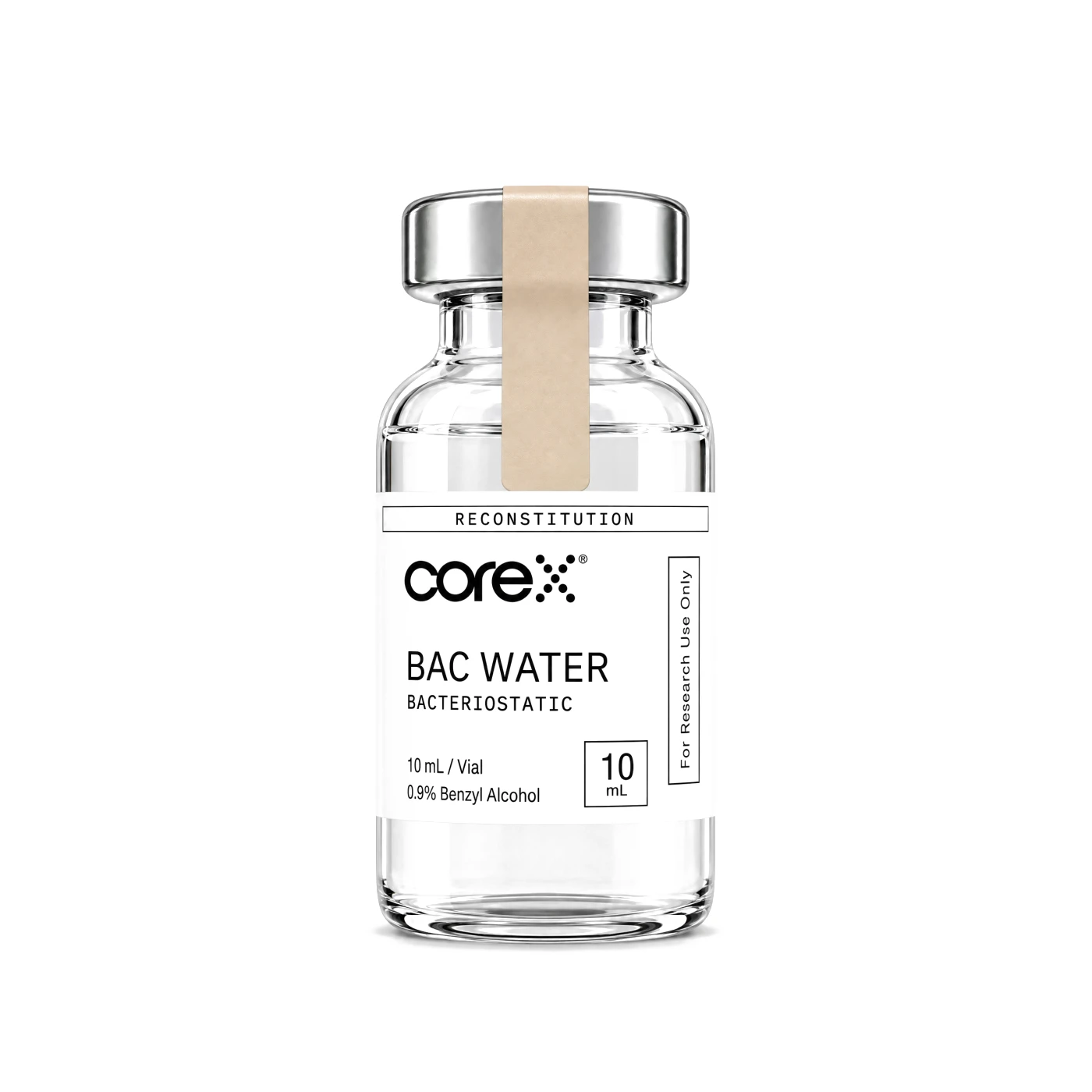
- Bacteriostatic Water
$19.00 · To reconstitute the powder
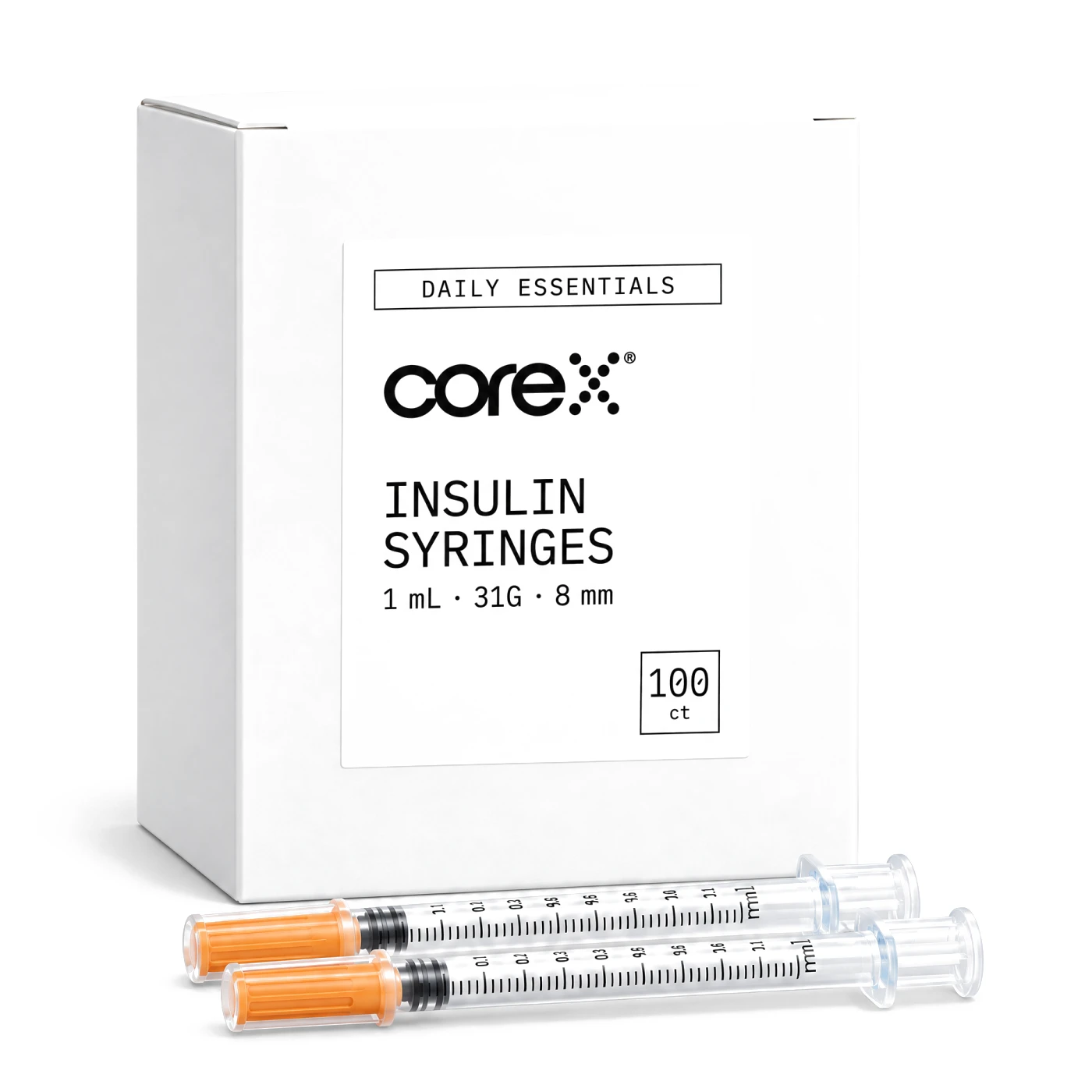
- Needles
Free · For reconstitution
- Alcohol Wipes
Free · To prep the vial stopper
About Cagrilintide
Cagrilintide is a long-acting amylin analog studied for its role in satiety signaling, a mechanism distinct from, and often researched alongside, the incretin pathway.
How it works
- Amylin Pathway
- Studied at amylin receptors, a satiety mechanism separate from the GLP-1 pathway.
- Complementary Profile
- Frequently examined in combination research precisely because its mechanism does not overlap with incretin agonists.
What you need
- Bacteriostatic Water
- Needles
- Alcohol Wipes
- A protocol guide comes with every order
Shipping & payment
- Packed and dispatched within 1–2 business days
- Delivered across Canada in 2–5 business days, tracked
- Temperature-controlled packaging where the product needs it
- Free shipping on orders over $120
- Prices in CAD · pay by Interac e-Transfer
- Format
- Lyophilised powder in a sealed vial
- Strength
- 5 mg per vial
- Storage
- Refrigerate, away from light. Once reconstituted, keep refrigerated and use within the window on the insert.
- Reconstitution
- 2 mL bacteriostatic water for this 5 mg vial (2.5 mg/mL)
- Route in research
- Subcutaneous
- Target
- Amylin
- SKU
- CGL5
Handling
- 1ReconstituteAdd bacteriostatic water down the side of the vial. Swirl, never shake. Agitation damages the peptide chain.
- 2StoreRefrigerate at 2–8°C once mixed. Reconstituted peptide is stable for the window given in your protocol guide.
- 3Measure with the calculator Use an insulin syringe at the units your protocol specifies. Rotate sites and log what you take.
- Purity
- High-performance liquid chromatography (HPLC), by an independent laboratory
- Identity
- Mass spectrometry, on the same batch
- How often
- Every batch
- COA
- The certificate of analysis is matched to the lot code printed on your vial
- Evidence
- Late clinical
Check your lot
Every vial carries a lot code. Enter it, or scan the QR on the label, to see its expiry and certificate of analysis.
Late clinicalCagrilintide has been evaluated in phase 1b and phase 2 trials and, in combination with semaglutide, in phase 3 randomized controlled trials in adults with overweight or obesity, with and without type 2 diabetes.
What research examines
- Satiety signaling via amylin receptors
- Weight management in adults with overweight or obesity
- Gastric emptying and fullness signaling
- Combination research with semaglutide
- Glycemic outcomes in type 2 diabetes alongside semaglutide
Reported in studies
- Safety and tolerability were assessed as study endpoints in phase 1b, phase 2 and phase 3 trials
- Specific adverse event rates are not summarized on this page
- Long-term human safety data for cagrilintide used alone are more limited than for the combination with semaglutide
Published research protocols
250 mcg, 3 days / week, am fasted
Research protocols have used 250–2,000 mcg per administration, 3 times per week (morning, fasted), stepping up from 250 mcg to 2 mg by week 13. Reported cycle: clinical - 16 week titration; alt model: 8 weeks on / 8 weeks off at 500mcg once weekly.
For research use only. These figures summarize published research protocols. They are not instructions or medical advice.
Measure with the calculatorCoreX AI
Ask about Cagrilintide
Plain answers, from the basics to the studies.
Research information, not medical advice.
FAQ
Questions, answered
Cagrilintide is a long-acting amylin analog studied for its role in satiety signaling. Its mechanism is distinct from the incretin pathway targeted by GLP-1 receptor agonists, and it is frequently researched alongside those compounds. Published work has described its development as a long-acting amylin analogue and its evaluation in clinical trials for weight management in adults with overweight or obesity, including combination studies with semaglutide.
Research investigates cagrilintide for activity at amylin and calcitonin receptors. These receptors are studied for their influence on gastric emptying and on the signaling that registers fullness. Because the amylin pathway is separate from the GLP-1 pathway, cagrilintide is often examined in combination research, where its mechanism is considered complementary to, rather than overlapping with, incretin agonists such as semaglutide.
Research has included a phase 1b trial of cagrilintide given concomitantly with semaglutide 2.4 mg, a dose-finding phase 2 trial of once-weekly cagrilintide for weight management, and a phase 2 trial of co-administered cagrilintide 2.4 mg and semaglutide 2.4 mg in type 2 diabetes. Phase 3 trials have evaluated coadministered cagrilintide and semaglutide in adults with overweight or obesity, with and without type 2 diabetes.
Safety and tolerability were assessed as study endpoints across the phase 1b, phase 2 and phase 3 trials of cagrilintide, both alone and combined with semaglutide. Specific adverse event rates are not summarized on this page, and readers seeking detail should consult the published trial reports. Long-term human safety data for cagrilintide used on its own are more limited than data for the combination with semaglutide.
Research protocols have used 250 to 2,000 mcg per administration, three times per week in the morning under fasted conditions, stepping up from 250 mcg to 2 mg by week 13. A reported clinical cycle involved a 16-week titration, and an alternative model used 8 weeks on and 8 weeks off at 500 mcg once weekly. Each CoreX order ships with a protocol guide.
You may also like
Vial · Pen Vial · Pen
 Vial
 Vial